
Stump Grinding Cleanup
Homeowners: Fix Stump Grinding Cleanup With a 1:1 Topsoil Mix

Shovel out the loose grindings within the first day or two, but don’t haul away all of it. Set aside a wheelbarrow’s worth for mulch, then backfill the hole with a mix of topsoil and the remaining chips, mounding it two to three inches above grade. Grass seed or sod can usually go down once the fill settles, which typically takes some weeks. If the pile is too big to manage alone, a professional haul-away service clears it in an afternoon.
TL;DR:
- Using mulch and topsoil in a 1-to-1 ratio prevents future sinking and promotes healthy grass growth within a few weeks to months.
- Removing loose chips with a shovel, rake, blower, and vacuum is efficient; staging debris for mulch saves time and prevents pests.
- Fully filling the hole with layered, tamped, and lightly watered soil while mounding 2 to 3 inches above grade avoids sunken patches.
- Leftover grindings make effective mulch when kept away from foundations and combined with green material to prevent nitrogen lock.
- Professional cleanup is advisable for multiple stumps, limited access, or tight timelines, with clear questions to ask providers about included services.
Table of Contents
- Stump Grinding Cleanup Methods That Actually Work
- Backfilling the Stump Hole the Right Way
- What To Do With Stump Grindings You Don’t Bury
- Avoiding Pest And Safety Problems After Cleanup
- How Long Settling And Decomposition Actually Take
- When To Call In Professional Cleanup
- What Roberto Sees On Every Job Site
- Let Roberto’s Handle The Cleanup For You
- Sources
- FAQ
Stump Grinding Cleanup Methods That Actually Work
Most homeowners overcomplicate this. You need four tools at most, and you probably already own three of them.
Start with a flat shovel and a stiff rake. For a medium stump (12 to 18 inches across), scooping the loose chips out of the crater and off the surrounding grass takes about 20 to 30 minutes if the grinding was done properly and the debris is still loose rather than compacted. Load it straight into a wheelbarrow as you go instead of piling it up first. Piling and reloading doubles your labor for no reason.
Once the bulk is gone, a leaf blower earns its keep. Fine sawdust settles into turf and grout lines in a way a rake can’t reach, and blowing it off pavement, decking, and grass takes just a few minutes. Keep the nozzle low and angled so you’re pushing dust off the surface, not driving it deeper into the lawn.
A shop vacuum comes in handy for tighter spots, like against a foundation or fence line where a blower just scatters debris into a corner. Use a wet/dry vac with a fine dust filter, not a standard household model. Sawdust clogs a bagless vacuum fast, and without the right filter you’ll blow as much dust out the exhaust as you suck up.
If you’re keeping chips for mulch or paths, stage them somewhere practical: away from the house, out of standing water, and covered with a tarp if rain is expected. A pile sitting against your siding for two weeks is asking for moisture and pest problems you don’t need.
When does haul away make more sense than DIY? Multiple stumps, a large trunk diameter, or limited physical ability to move a few hundred pounds of wet wood chips are all good reasons to call a debris removal service. Full-service cleanup typically includes loading, hauling, and disposal, sometimes bundled with the original grinding quote and sometimes billed as an add-on, so it pays to ask up front.
Cleanup order that saves you time:
- Shovel and rake loose chips into the wheelbarrow first.
- Blow remaining sawdust off turf and hardscape.
- Vacuum tight corners and foundation edges.
- Stage or bag what you’re keeping; haul off the rest.
Pro Tip: Do the blower pass on a dry day. Wet sawdust clumps and smears instead of lifting, and you’ll end up raking it anyway.
Backfilling the Stump Hole the Right Way
A hole packed with pure wood chips will sink. Chips compress over time and leave a depression right where you wanted a flat lawn, so the fill needs real soil in it.
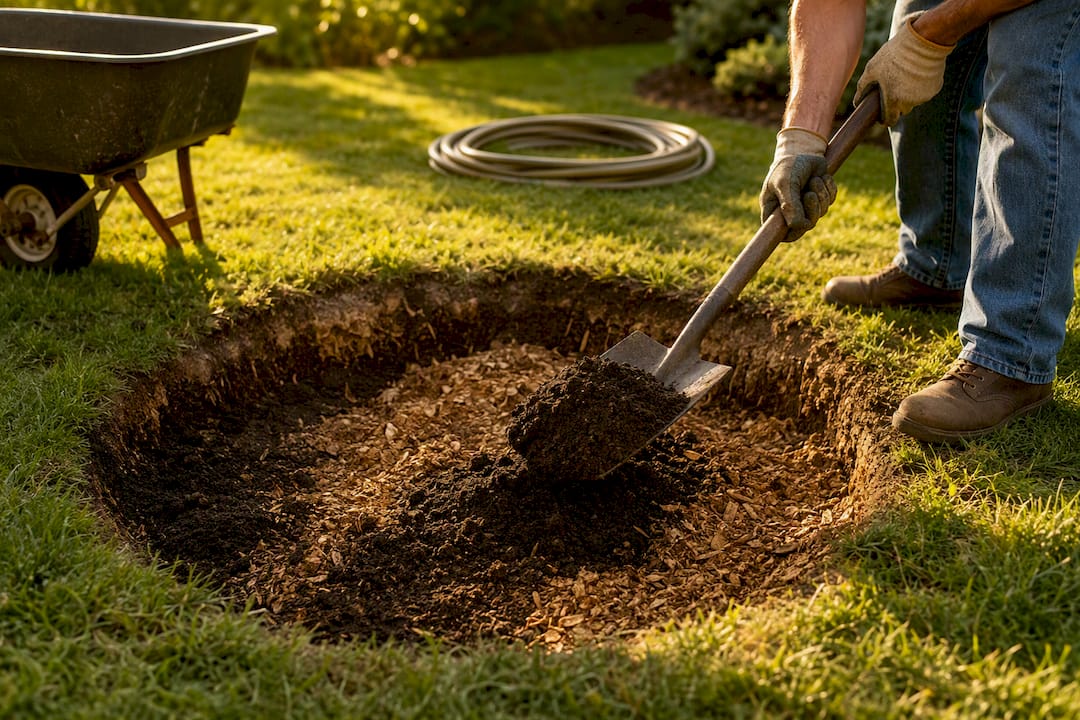
The reliable ratio is roughly one part leftover grindings to one part topsoil, or lean even heavier on topsoil if you’re planting something sensitive. Loam-based topsoil works better than cheap fill dirt because it holds structure and drains reasonably well once compacted. Removing most of the grindings before adding topsoil matters more than people expect. Leave too much wood in the mix and new grass seed struggles to root.
Here’s the process that actually prevents the sunken spot six months later:
- Fill the hole in layers, tamping each layer with a flat shovel or your foot before adding the next.
- Water the fill lightly between layers to help it settle and eliminate air pockets.
- Mound the final layer two to three inches above the surrounding grade. That extra height accounts for settling as the material compacts and the buried root fragments break down.
- Wait at least a week or two before overseeding, longer if you plan to lay sod, so the fill has time to firm up.
For seed, make sure it’s actually touching soil, not resting on loose mulch, or germination rates drop fast. Sod is more forgiving of an imperfect surface but still needs firm, level ground to root into. Spring and early fall are the best windows for either, when soil temperatures support root growth without heat stress.
Buy more topsoil than you think you need. A single medium stump hole often eats through two to four bags more than the initial estimate once you account for settling and tamping.
What To Do With Stump Grindings You Don’t Bury
The chips you set aside aren’t waste. They’re free mulch, and free mulch is worth using well.
- Spread grindings as surface mulch in beds or around trees at a two to three inch depth, no deeper, and keep the material at least six inches back from foundations and tree trunks.
- Composting works, but fresh grindings are almost pure carbon, so pair them with green material like grass clippings or kitchen scraps to avoid nitrogen lock, the temporary nitrogen shortage that stunts nearby plants while microbes break down the wood.
- A thin layer of aged chips along a walking path or slope helps with erosion control and looks intentional rather than leftover.
- Never work fresh grindings directly into a vegetable bed or a planting hole. The carbon-to-nitrogen imbalance pulls nitrogen away from whatever you just planted, and tomatoes or peppers will show it within weeks.
Pro Tip: If you’re composting, add a scoop of nitrogen fertilizer or a few inches of grass clippings every time you add a layer of grindings. It cuts the breakdown time meaningfully compared to chips composted alone.
Avoiding Pest And Safety Problems After Cleanup
Wood chips piled against your house are an open invitation to termites and carpenter ants. Keep any mulch or leftover grindings six to twelve inches clear of foundations and siding. Don’t stack them against a wood fence either.
- Walk the area for root fragments and sharp chunks of wood before mowing. They wreck mower blades and cause real trip hazards for kids or pets.
- Watch for sucker shoots pushing up near the old stump; snapping them off by hand works for the first season, and a professional herbicide treatment handles persistent regrowth.
- Small white or tan mushrooms popping up near the fill are usually harmless fungi feeding on buried wood, not a sign of trouble.
- A cluster of larger shelf fungi or a soft, spongy patch spreading beyond the original stump area is worth a closer look, since that can signal deeper root rot spreading into nearby roots.
How Long Settling And Decomposition Actually Take
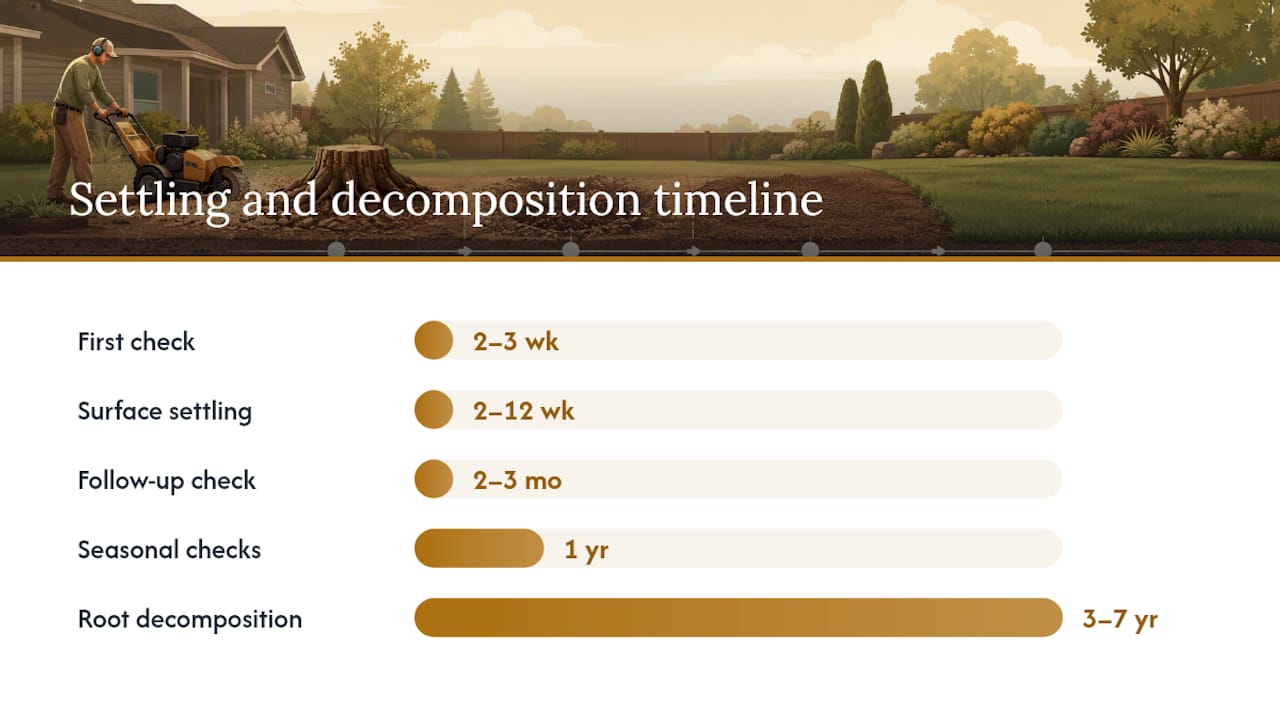
Surface settling shows up fast, usually within two to twelve weeks as the backfill compacts and buried chips start breaking down. That’s the timeline that matters for lawn repair.
Full decomposition of the leftover root mass underground is a much slower story. Depending on the species, buried roots and root fragments can take three to seven years to fully break down, with dense hardwoods on the slow end and softer species breaking down faster. That doesn’t stop you from planting grass on top; it just means minor sinking can continue for a while.
Check the fill after two to three weeks, again around two to three months, and then once each season through the first year. Spongy patches or a sudden dip usually mean it’s time to top off with more soil, not start over.
When To Call In Professional Cleanup
DIY works fine for a single small stump with easy access. It stops making sense once you’re dealing with several stumps, a tight side yard a wheelbarrow can’t reach, or a timeline that requires sod going down immediately.
A full-service job typically covers debris removal, backfilling with real topsoil, grading, tamping, and either seed or sod installation, along with disposal of everything hauled off site. Before you hire anyone, ask three things:
- Is cleanup and haul-away included in the quote, or billed separately?
- Are you insured for the work on my property?
- What’s your follow-up policy if the fill settles unevenly?
Price swings mainly on volume of debris, how hard the site is to access, local disposal fees, and whether you need extra topsoil or sod brought in.
What Roberto Sees On Every Job Site
The biggest fix I make on repeat visits: homeowners bury too many chips and not enough soil, then wonder why the lawn dips a year later. Staging topsoil before grinding even starts saves real labor, because you’re not scrambling for fill material once the crater’s sitting open. We quote most jobs within a day or two, insured, backed by a 30-day satisfaction guarantee, because a fix that doesn’t hold isn’t a fix.
— Roberto
Let Roberto’s Handle The Cleanup For You
Roberto’s Stump Grinding Services is the option for homeowners who’d rather not spend a Saturday hauling wood chips and buying topsoil bag by bag. We grind stumps below grade, then handle the full restoration: debris removal, backfilling with quality topsoil, mulch delivery and installation, and sod when you want the lawn looking finished the same week.

Many stump grinding service jobs come with a free on-site quote within one to two days, insurance, and a satisfaction guarantee if anything settles wrong. Some providers have positive customer reviews on Google for this type of cleanup work. Request a quote through our stump grinding service page and see what a finished yard looks like within days, not weeks.
Sources
For composting basics that keep wood chips from turning into a nitrogen problem, the EPA’s home composting guidance covers the fundamentals. Check your local public works department for yard-waste pickup rules before planning a large haul-away.
- Simplysolved
- What to Do After Stump Grinding | Yard Restoration Guide - ForestKeepers
- Composting at home — EPA
FAQ
How Should I Clean Up The Area After Stump Grinding?
Remove most of the loose chips with a shovel, rake, and wheelbarrow, then blow or vacuum the remaining sawdust off turf and pavement. Save some chips for mulch and backfill the hole with a topsoil mix rather than leaving it packed with wood.
How Much Should It Cost To Grind A Tree Stump?
Cost depends on stump diameter, root spread, access, and whether cleanup and haul-away are included in the quote, so pricing varies by job. Ask any contractor whether debris removal and backfill are part of the price or billed as extras.
What Should I Do With The Dirt After Stump Grinding?
Mix leftover soil and grindings roughly one to one with fresh topsoil, tamp it in layers, and mound the surface two to three inches above grade to allow for settling. Avoid burying pure wood chips alone, since that mix compresses and sinks over the following months.
Will A Tree Grow Back If I Grind Its Stump?
Grinding destroys the visible stump and much of the upper root crown, but some species still push up sucker shoots from surviving root fragments. Snapping shoots off as they appear usually stops regrowth, and persistent suckering may call for a professional herbicide treatment.
Recommended
Get a free in-person quote.
We come out, walk the property with you, and give you the number on the spot, free, no obligation, across 18 north Atlanta cities.
Call (770) 309-1050