
Sod Vs Seed
Pay More Now or Wait 4 to 6 Weeks: Sod vs Seed for Homeowners
If you need a lawn fast and have the budget, lay sod. If you’re working with less money, a bigger yard, or slopes that need root coverage, seed or hydroseed makes more sense. Irrigation access and your soil’s current condition can flip that answer either way, so check the decision checklist below before you commit.
TL;DR:
- Sod is best for quick lawn coverage and erosion control on small yards, but its higher upfront cost makes it less practical for large areas.
- Hydroseed offers a cheaper per-square-foot option with faster initial greening but takes months to fully establish and requires consistent watering.
- Proper soil testing and site preparation significantly impact success, especially for sod, and often determine long-term lawn health more than material choice.
- Watering discipline during establishment is critical for both sod and seed, with failure to water properly leading to patchy or unsuccessful lawns.
- Professional installation provides better results by ensuring correct grading, timing, and soil blending, especially on slopes or complex sites.
Table of Contents
- Sod vs Seed: Cost, Timeline, and Trade-Offs at a Glance
- How Much Will Sod, Seed, or Hydroseed Actually Cost You?
- How Long Until Sod or Seed Actually Looks Like a Lawn?
- Early Care and Long-Term Lawn Health: Sod vs Seed
- Soil Prep Checklist Before You Lay Sod or Spread Seed
- Quick Checklist: Should You Choose Sod, Seed, or Hydroseed?
- Roberto’s Field Notes on Sod Installation
- What This Comparison Gets Wrong in Most Guides
- Get a Free Quote for Professional Sod Installation
- Sources
- FAQ
Sod vs Seed: Cost, Timeline, and Trade-Offs at a Glance
Sod costs more but delivers a usable lawn almost immediately. Seed and hydroseed cost less, especially at scale, but demand patience and near-daily watering for weeks.
Here’s how the three methods stack up:
- Sod: roughly $1.30 to $2.85 per square foot installed, ready for light foot traffic in about two to three weeks.
- Hydroseed: about $0.15 to $0.45 per square foot professionally installed, with visible green in one to two weeks but full establishment taking months.
- Dry seed: typically the lowest material cost, but the slowest and most weather-dependent, with first mow often four to six weeks away.
- Erosion control: sod wins immediately; hydroseeding can outperform dry seed on slopes because the mulch matrix holds seed and moisture in place during runoff events.
- Species flexibility: seed offers a far wider selection of grass varieties for shade or drought tolerance, while sod is limited to whatever the local farm grows.
Weed exposure runs higher with seed during the first month, simply because bare soil is open ground for anything windblown. Sod arrives as a finished mat, which shuts most of that competition out from day one.
How Much Will Sod, Seed, or Hydroseed Actually Cost You?
Size changes the math more than most homeowners expect. On a small yard, sod’s premium feels manageable. On a large one, it can double or triple your total project cost compared to hydroseed.
Here’s a rough breakdown by lot size:
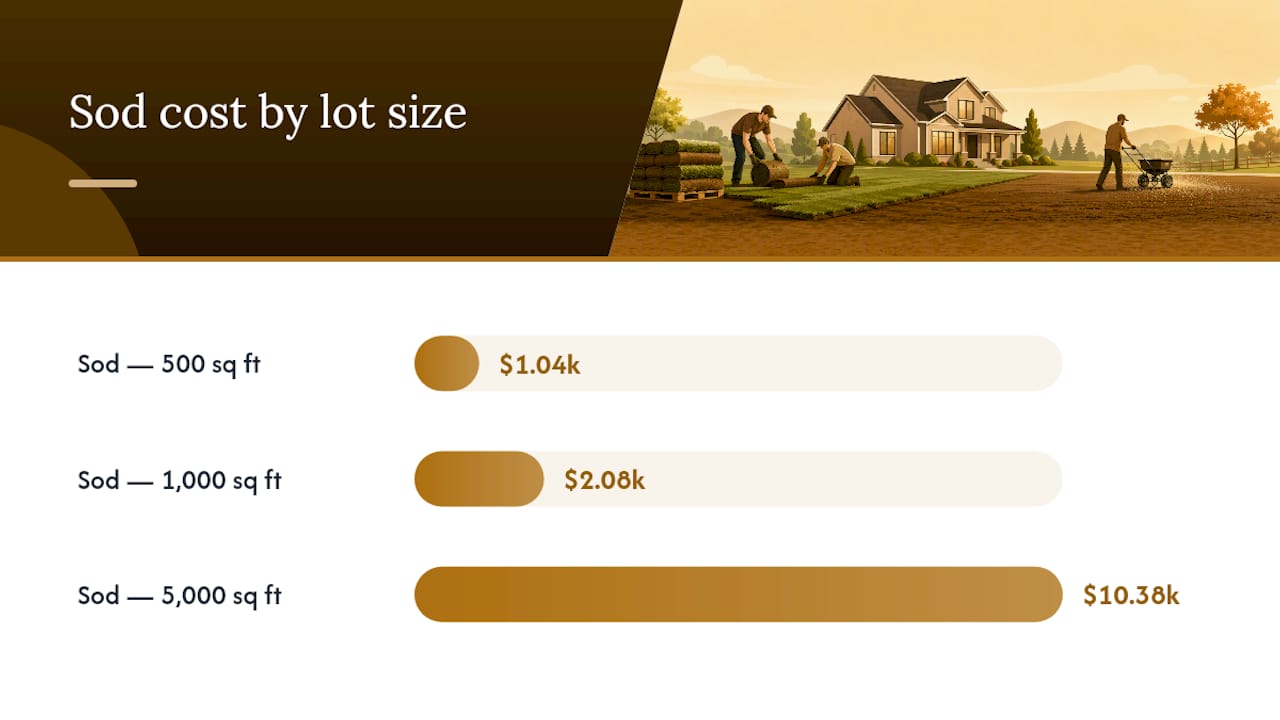
- 500 square feet: sod runs roughly $650 to $1,425 installed; hydroseed runs about $75 to $225; dry seed material alone often lands under $50, though prep and starter fertilizer add to that.
- 1,000 square feet: sod climbs to $1,300 to $2,850; hydroseed stays in the $150 to $450 range.
- 5,000 square feet: sod can hit $6,500 to $14,250; hydroseeding typically costs $750 to $2,250, a gap wide enough to change which method makes financial sense.
Delivery fees, labor, and how far the sod farm sits from your address all push sod pricing around. A crew laying sod on a flat, easy-access yard charges less per square foot than one navigating a sloped lot with tight truck access. Hydroseeding tends to become the more cost-effective option once you cross roughly a quarter-acre, since spray equipment covers ground faster than hand-laid sod strips.
Pro Tip: Measure your yard in square feet, multiply by the low and high end of each method’s range, then request two or three quotes. Installed pricing almost always beats a DIY estimate built from material cost alone, because labor and site prep are where budgets actually blow up.
How Long Until Sod or Seed Actually Looks Like a Lawn?
Sod and seed follow completely different clocks, and confusing the two is how new lawns get damaged.
- Sod: looks like a finished lawn on day one, but roots aren’t anchored yet. A tug test at 10 to 14 days tells you when it’s ready. Gently lift a seam; if it resists, roots have taken hold and light foot traffic can begin. Full establishment for mowing and normal use follows at the two to three week mark.
- Seed and hydroseed: germination shows up in 5 to 14 days depending on grass type and weather. First mow usually waits until four to six weeks, once grass hits mowing height, and full root establishment can take several months.
- Watering matters more than either timeline: sod needs daily watering for the first one to two weeks to prevent the roots from drying before they knit into native soil. Seed needs light, frequent watering, sometimes two to three times a day, to keep the surface consistently moist until germination finishes. Miss that window on either method and you risk patchy failure.
Early Care and Long-Term Lawn Health: Sod vs Seed
The workload during establishment looks different for each method, and so does the payoff years down the road.
Sod demands frequent, shallow watering early, then a taper to deeper, less frequent sessions once roots set. Seed and hydroseed need that same shallow, frequent watering pattern, just stretched out longer since germination and rooting happen on a slower schedule.
Here’s what tends to hold true over the following seasons:
- Root depth: seeded lawns that establish under proper watering discipline often develop deeper root systems over time, since roots grow into native soil from day one rather than transitioning from a farm’s rootzone.
- Drought tolerance: follows root depth. A well-established seeded lawn can handle dry stretches better once mature, though sod that’s had a full season or two to root usually catches up.
- Weed pressure: highest with dry seed during the first month of bare soil exposure. Sod suppresses weeds almost immediately by covering the ground.
Pro Tip: Don’t skip the first mow just because the grass looks thin. Mowing at the correct height, roughly a third of blade length at a time, encourages lateral growth that thickens seeded lawns faster than letting them grow unchecked.
Soil Prep Checklist Before You Lay Sod or Spread Seed
Skipping soil prep is the single most common reason either method fails, and it’s the step most homeowners rush past.
- Test your soil first. A soil test tells you pH and nutrient levels before you buy anything. Soil testing is underused by homeowners but it directly shapes which seed blend you choose and how much starter fertilizer or lime you actually need, often reducing long-term maintenance costs.
- Grade the site and fix drainage. Low spots collect water and rot roots under sod or wash out seed. Loosen compacted soil to at least a few inches deep so roots, whether sod or seedling, can push down instead of spreading sideways.
- Blend the rootzone for sod. A frequent, avoidable problem is soil layering, where the sod farm’s growing medium doesn’t match your native soil texture. Incorporating some of the sod’s own root zone soil into your loosened topsoil helps roots transition smoothly instead of stalling at the seam.
- Match seed to your climate. USDA hardiness zone data helps narrow which grass species will actually thrive on your site, especially in shaded or drought-prone corners seed handles better than sod.
- Time the install. Cool-season grass seed goes down best in late summer or early fall; sod can go down across a longer window since it doesn’t depend on germination weather.
Pro Tip: Order sod for delivery the same day or the day before installation. Sod that sits stacked on a pallet for more than 24 to 48 hours starts heating up and can suffer root damage before it ever touches soil.
Quick Checklist: Should You Choose Sod, Seed, or Hydroseed?
Run through these questions honestly and the right method usually becomes obvious fast.
- Do you have a hard deadline (a sale, an event, kids or pets needing a yard now)? Sod is the practical answer.
- Is your yard small, under a few thousand square feet? Sod’s cost premium is easier to absorb at that scale.
- Do you have working irrigation or the discipline to hand-water daily? Without it, either method struggles, but seed fails faster.
- Is your lot large or on a slope? Hydroseed usually wins here: it’s cheaper per square foot at scale and holds seed against runoff better than dry seed.
- Is your budget tight and your timeline flexible? Seed or hydroseed stretches your dollars further.
- Is your soil severely mismatched (heavy clay, extreme compaction, no topsoil at all)? That’s a red flag to fix drainage and grading first, or bring in a professional before either method goes down.
Roberto’s Field Notes on Sod Installation
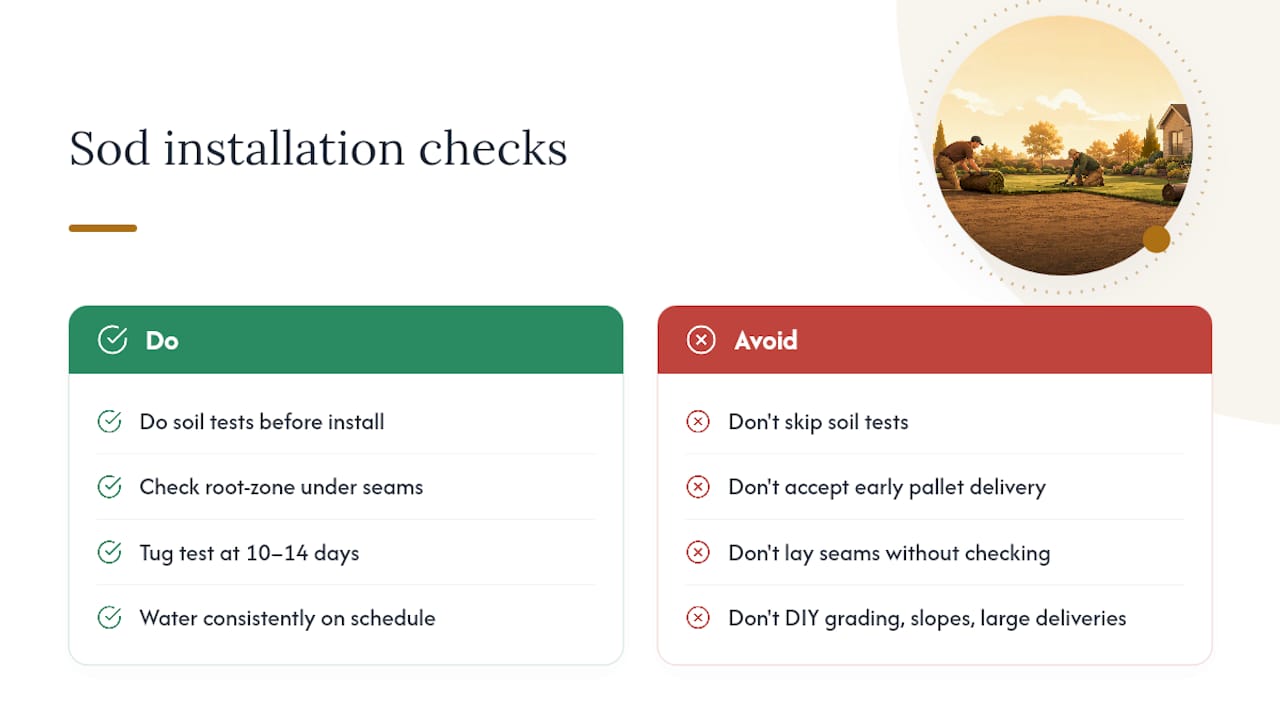
After watching dozens of installs across North Atlanta yards, the failures follow a pattern: skipped soil tests, sod delivered a day too early and left baking on pallets, and seams laid without checking for root-zone mismatch underneath. The tug test at 10 to 14 days catches most problems before they become expensive. Watering discipline, not the sod itself, is usually what separates a thriving lawn from a patchy one. Complex grading, steep slopes, or large deliveries are where hiring a pro pays for itself.
What This Comparison Gets Wrong in Most Guides
Most sod vs seed comparisons treat cost and speed as the whole decision. They’re not. The bigger variable is whether you’ll actually follow through on watering discipline for two to six weeks, because that single factor determines success more than the material you choose.
Conventional advice also underplays soil prep. Homeowners assume sod skips the work seed requires, but a sod lawn laid over compacted, mismatched soil fails just as often as seed thrown on bare dirt. The tug test gets mentioned everywhere, but almost nobody explains that timing it too early, before day 10, gives you a false negative and can tempt you into walking on roots that haven’t set.
If there’s one thing to prioritize first, it’s the soil test. It’s the cheapest step in the entire project and it quietly determines whether your fertilizer, seed blend, and watering schedule actually work together instead of fighting each other. Skip it, and you’re gambling with everything downstream.
— Roberto
Get a Free Quote for Professional Sod Installation
Skip the guesswork on soil-root mismatch and seam timing. A professional sod installation service benefits from focused expertise in grading, delivery timing, and rootzone blending.
Professional sod installation quotes often start with a free, in-person visit scheduled within a few business days, to check soil condition, plan delivery timing, and discuss watering schedules. These jobs are typically fully insured and may include satisfaction guarantees. If your yard is a good fit for sod based on the checklist above, request a free on-site quote through the sod installation service page and get a firm timeline before you commit to a delivery date.
Sources
- Seeding and sodding home lawns | University of Minnesota Extension
- Starting a new lawn | University of Maryland Extension
- Hydroseeding vs Sod: Cost, Growth Time & Which Is Right (2026) | YardCalc
FAQ
Is Sod a Waste of Money?
No, not if you need fast coverage, erosion control, or a usable lawn within weeks rather than months. It’s a poor value only when you have a large lot, a tight budget, and no urgent deadline, where seed or hydroseed stretches your money much further.
Can I Just Lay Sod on Dirt?
You can, but skipping soil prep is one of the most common reasons sod fails to root properly. Loosening compacted soil and blending in some of the sod’s own rootzone material helps roots transition instead of stalling at a layered seam.
Is It Cheaper to Buy Sod or Seed?
Seed and hydroseed cost less almost every time, especially on larger lots. Hydroseeding runs about $0.15 to $0.45 per square foot professionally versus $1.30 to $2.85 per square foot for sod installed, a gap that widens fast as square footage climbs.
What Are the Downsides of Using Sod?
Sod costs more upfront and limits you to whatever grass varieties your local sod farm grows, unlike seed’s much wider species selection. It also needs daily watering for one to two weeks and can fail if laid over mismatched or poorly prepped soil.
How Do I Know When Sod Has Rooted?
Perform a tug test around 10 to 14 days after installation by gently lifting a seam. If it resists and won’t lift easily, roots have taken hold and the lawn can handle light foot traffic.
Does Robertostumpservices Offer Sod Installation Quotes?
Yes, Robertostumpservices provides free on-site quotes within one to two business days for sod installation across North Atlanta. Current pricing details are available directly through the sod installation page.
Recommended
Get a free in-person quote.
We come out, walk the property with you, and give you the number on the spot, free, no obligation, across 18 north Atlanta cities.
Call (770) 309-1050