Playground Mulch Options
Stop Guessing: Free 1–2 Day Quotes for Bulk Playground Mulch Options
For general yard and bed projects, the top playground mulch options that actually make sense are hardwood, cedar, pine bark, and dyed double-ground mulch, delivered in bulk rather than bagged. Once a project needs more than 10 to 15 bags, ordering by the cubic yard and having a crew spread it costs less per yard and saves a weekend of shoveling. A local contractor can quote the job, deliver the right material, and install it correctly the first time.
TL;DR:
Hardwood mulch generally lasts one to two years, while pine bark nuggets can remain effective for up to three years with minimal maintenance.
Bulk mulch delivery is more cost-effective than bags once the project exceeds 10 to 15 bags, especially when combined with professional installation.
For erosion-prone areas or slopes, coarse wood chips outperform fine mulch, which can wash away in heavy rain, making site-specific material choice crucial.
Never use landscape mulch under play equipment, as it is not tested for impact safety; certified playground surfacing is required for fall protection.
Properly assessing mulch upon arrival involves checking color, texture, smell, and temperature to ensure it has not begun souring or composting actively.
Table of Contents
Playground Mulch Options: Common Types, Pros and Cons
The term “playground mulch” gets used loosely online, but for yard work and planting beds, you’re really choosing among a handful of landscape mulch types. Each one behaves differently once it’s down, and picking the wrong one means redoing the job in a year.
-
Hardwood mulch: The all-purpose choice. It holds moisture well, suppresses weeds, and breaks down slowly enough to last a full season without looking ragged.
-
Cedar mulch: Reddish-brown, aromatic, and naturally resistant to some insects. It costs more than hardwood but holds its color and shape longer in high-visibility spots.
-
Pine bark nuggets: Chunky and slow to decompose, which makes them a strong fit for shrubs, foundation beds, and any area you don’t want to touch again for a couple of years.
-
Double-ground (double-shredded) mulch: Finer texture that knits together after rain, giving beds a tidy, finished look. It’s the material most commonly favored for high-visibility beds because it spreads neatly and holds a uniform texture.
-
Dyed or colored mulch: Usually a double-ground base treated with iron oxide or carbon-based dye for deep red, brown, or black color. It fades over months rather than weeks, though full sun accelerates that.
-
Wood chips and composted wood: The budget option. Chunkier and less refined than bark nuggets, but effective for paths, erosion control, and covering large areas cheaply.
None of these is universally “best.” Bulk suppliers typically stock all of them side by side, precisely because homeowners need different textures and longevity for different jobs — a display bed by the front door has different needs than a slope that washes out every spring.
Which Mulch Fits Flower Beds, Trees, and Erosion Control
Matching material to site matters more than brand loyalty to one type of mulch. A fine double-ground mulch looks sharp around annuals and perennials because it packs down and resists blowing away in wind. Pine bark nuggets work better around trees and established shrubs, where you’re not fussing with the bed every few weeks and want something that lasts. For erosion-prone slopes or drainage swales, larger wood chips hold their ground and slow water runoff better than fine mulch, which can wash downhill in a hard rain.
-
Flower and display beds: double-ground or dyed double-ground, 2 to 3 inches deep
-
Trees and shrubs: pine bark nuggets or hardwood, kept clear of the trunk
-
Slopes and erosion zones: coarse wood chips or composted wood
-
Acid-loving plantings (azaleas, blueberries, rhododendrons): pine bark mulch, which gradually acidifies the soil better than neutral hardwood
Never pile mulch directly against a trunk. It traps moisture against the bark, invites rot and pests, and over years can girdle the roots.
Pro Tip: Match your mulch replenishment schedule to the material. Fine double-ground mulch breaks down faster and usually needs a top-off yearly, while pine bark nuggets can often go two to three years between refreshes.

How to Calculate Cubic Yards for a Bulk Mulch Order
Ordering the right amount comes down to one formula: square footage times desired depth, converted to cubic yards. One cubic yard covers roughly 100 square feet at a 3 inch depth, which is the standard for most beds.
-
Measure the length and width of each bed and multiply to get square footage.
-
Add up all the areas you’re covering into one total.
-
Divide that total by 100 to get the cubic yards needed at a standard 3 inch depth.
-
Round up slightly. Suppliers rarely deliver in fractional yards, and it’s better to have a little extra than to run short mid-job.
Picturing the pile helps more than the math. A 3 cubic yard delivery looks about like a large sofa dumped in your driveway, while a 10 yard load resembles a compact car, roughly 10 to 12 feet long and 3 to 4 feet high. Most residential jobs fall somewhere between 3 and 15 cubic yards, and bulk delivery starts paying off once you’re past the equivalent of 10 to 15 bags of bagged mulch.
Price depends on more than the yardage. Material type, whether it’s dyed, how far the supplier has to drive, and how hard it is to reach your drop spot all factor into the final quote. When you call a supplier, give them the mulch type, color, exact yardage, and a specific dump location, and ask for a delivery ticket that confirms product and quantity in writing.
What to Check When Bulk Mulch Arrives
Before a delivery crew leaves your driveway, take five minutes to look the pile over. Confirm the ticket matches what you ordered: product type and yardage should be printed on the paperwork, not just verbally confirmed.
-
Check color and texture against what you ordered. Natural hardwood should look brown and fibrous; dyed mulch should look uniformly saturated, not blotchy.
-
Smell the pile. It should smell woody or earthy, not sour, like ammonia, or chemical.
-
Touch it. Mulch should feel slightly damp, not bone dry or soggy.
-
Dig into the center with a shovel or your hand and feel for heat.
That last check matters more than people assume. A pile can look fine on the surface while souring is happening deep in the core, where you can’t see or smell it without digging in. A pile that’s steaming or noticeably hot at the center is actively composting and needs to cool before it touches your plants. If the material looks or smells wrong, document it with photos, don’t spread it, and contact the supplier before you accept the delivery as final.
Installing Mulch Correctly the First Time
Good installation starts before the mulch even arrives. Clear weeds from the bed, do any minor grading so water drains away from the house, and protect lawn edges or landscaping you don’t want damaged by wheelbarrows or a skid loader.
-
Pull existing weeds and rake the bed smooth.
-
Consider landscape fabric under paths or low-maintenance beds, though it’s rarely necessary under trees and shrubs.
-
Spread mulch 2 to 3 inches deep for most beds, deeper only where erosion control demands it.
-
Keep mulch pulled back from tree trunks using the “donut” method rather than piling it up in a volcano shape against the bark.
-
Spread the material within one to two weeks of delivery so it doesn’t dry out, mat, or start decomposing in the pile.
-
If the pile arrived hot, let it sit and cool for about 24 to 48 hours before it goes anywhere near root systems.
Pro Tip: If your yard is larger than a quarter acre or the drop spot is hard to reach with a wheelbarrow, hiring a crew for spreading usually costs less than the hours you’d lose doing it solo.
Anyone weighing hardwood against pine straw for a specific planting should factor in how much handling time each material adds, since coarser mulches move faster but finer ones need more careful spreading near stems.
Safety Considerations for Playground-Adjacent Mulch Use
If your property includes a play area, swing set, or trampoline near a landscaped bed, treat that zone differently from the rest of the yard. Landscape mulches like hardwood, cedar, and pine bark are chosen for appearance, moisture retention, and weed control, not for cushioning a fall. They were never engineered or tested against the ASTM F1292 standard that governs impact attenuation for play surfacing, and depth alone doesn’t guarantee a safe fall height rating the way certified playground surfacing does.
Fall height compliance under equipment like swing sets and climbers is a specialized surfacing decision, generally handled with materials engineered and certified for that specific purpose rather than decorative bark or wood chips. If a play structure sits close to a mulched bed, the safest approach is to keep a clear buffer between the play zone’s fall radius and any ornamental mulch, and to treat the two areas as separate projects with separate materials. Mixing them, using leftover landscape mulch under a swing set because it’s convenient, is one of the more common mistakes homeowners make, and it’s worth avoiding even when the material looks similar in a bag or a pile.
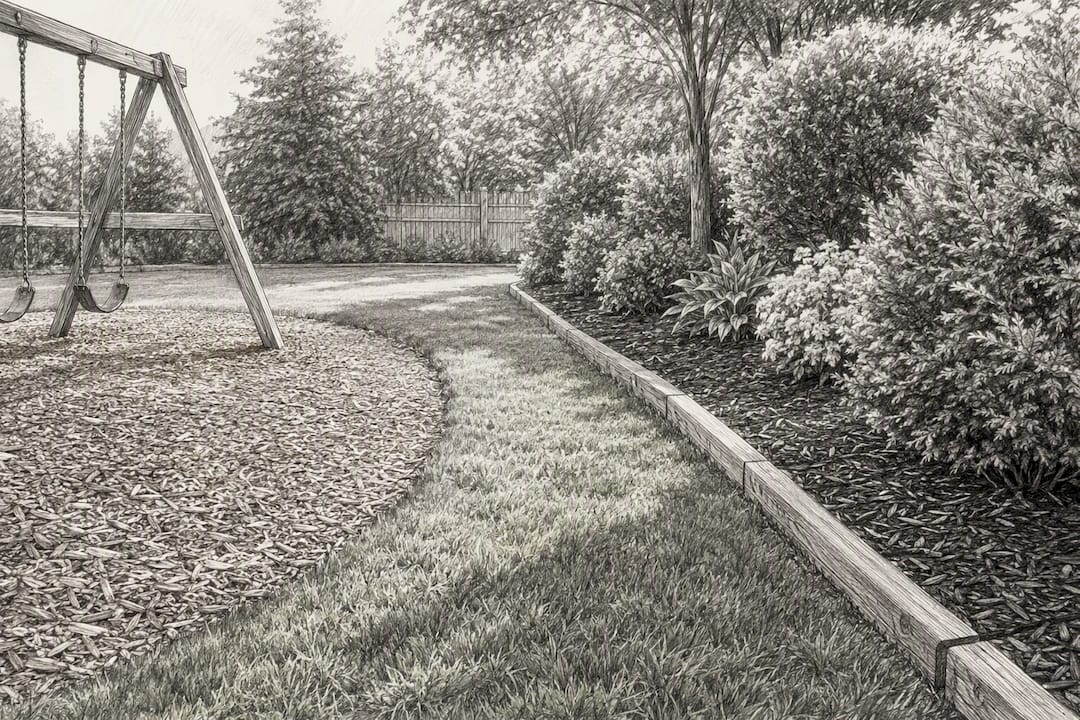
For everything outside that fall zone, hardwood, cedar, pine bark, and dyed mulch remain the right call. The distinction is about intended use, not material quality.
Environmental Impact of Different Mulch Options
Wood based mulches are, for the most part, a low-impact choice compared to synthetic groundcovers. Bulk delivery itself carries an environmental edge over bagged mulch: fewer plastic bags end up in landfills, and truck deliveries of loose material generate less packaging waste overall than the equivalent volume purchased bag by bag.
Among the wood types, sourcing matters as much as the material itself. Composted wood and recycled wood chips, often made from tree trimmings, pallets, or land-clearing debris, put waste wood to use rather than sending it to a landfill or a burn pile. Dyed mulch raises a separate question homeowners ask often: are the dyes safe? Most commercial colorants today use iron oxide (the same compound that gives rust its color) or carbon-based black dye, both considered low-toxicity for ornamental use. The bigger environmental consideration with dyed mulch is source wood. Some cheaper dyed products use recycled pallet wood, which can carry contaminants if not properly screened, so buying from an established local supplier matters more than the color itself.
Undyed hardwood, cedar, and pine bark break down naturally into soil, feeding microbial activity and improving soil structure over time. That decomposition is the whole point. It’s also why replenishment is a feature of the system, not a flaw.
How Long Mulch Lasts and What Maintenance It Needs
Durability varies a lot by material, and knowing the timeline ahead of time keeps you from being surprised when a bed starts looking thin.
Fine, double-ground and dyed mulches typically need a fresh application every year to keep their color and depth, since they break down fastest and dyed color fades under UV exposure over a single growing season. Hardwood mulch generally holds up for one to two seasons before it thins out enough to need topping off. Pine bark nuggets are the long-haul option: their chunky shape resists compaction and decomposition, often lasting two to three years with only minor raking to keep the surface even.
Maintenance beyond replenishment is minor. Rake mulch back into place after heavy storms or if pets or foot traffic scatter it, and check depth once a year, since mulch naturally compacts and settles over time even without decomposing. Weeds that do sprout through mulch pull easily by hand if caught early, since the material keeps root systems shallow. The one habit worth building is checking the area around tree trunks each spring. Mulch tends to creep inward over a season, and pulling it back a few inches keeps bark from staying damp against the wood.
Rubber Mulch and Engineered Wood Fiber vs. Landscape Mulch
Homeowners researching mulch sometimes come across rubber mulch or engineered wood fiber and wonder if either belongs in a flower bed or yard project. They don’t, and the reasoning is worth understanding rather than just taking on faith.
Rubber mulch is made from shredded recycled tires and is manufactured specifically for playground surfacing, where its job is shock absorption under a fall, not moisture retention or soil health. It doesn’t decompose, doesn’t feed soil biology, and in a planting bed it can actually trap heat and offer zero nutritional value to plants. Engineered wood fiber (sometimes labeled EWF) is a specially processed wood product, ground and screened to a consistent size and tested for depth-based fall protection under playground equipment. It’s a different product from bagged or bulk landscape mulch, made to a different specification, for a different job entirely.
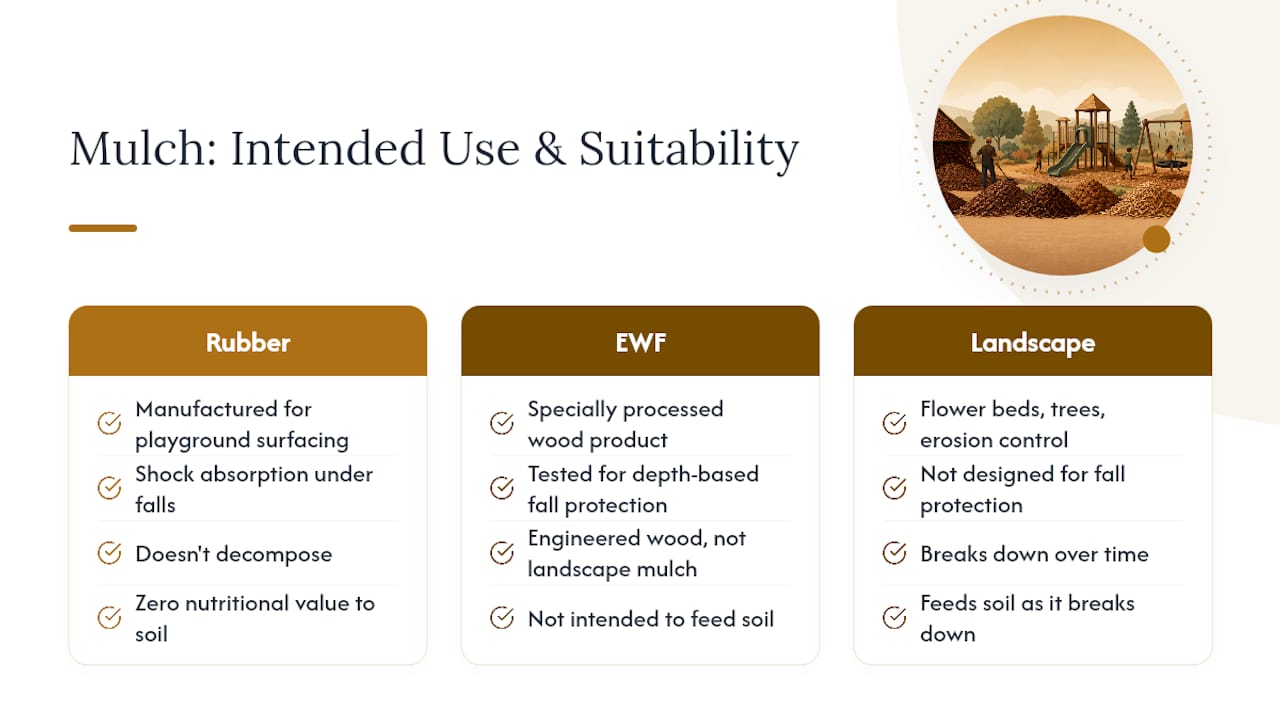
For flower beds, trees, erosion control, and general yard coverage, wood-based landscape mulch remains the practical and appropriate choice. It costs less, feeds the soil as it breaks down, and comes in a range of textures and colors that suit ornamental use. Rubber mulch and engineered wood fiber solve a fall-safety problem under play equipment. Landscape mulch solves a soil and appearance problem in your beds. Neither one is a substitute for the other’s intended job.
How Roberto’s Handles Mulch Quotes and Installation
A lot of the guesswork in this article disappears once a professional handles it. Robertostumpservices offers free on-site quotes within 1 to 2 days, which means someone looks at your actual beds, measures square footage, and recommends a material and depth instead of you eyeballing it from a bag chart online.
The typical workflow runs: site visit, quote, material and yardage selection, scheduled delivery, on-site inspection of the load, then installation. Because crews are insured and often already coordinating stump grinding work on the same property, beds get cleared and ready for mulch in one visit instead of two separate projects. A 30 day satisfaction guarantee backs the finished work, which matters more than it sounds. Mulch that settles unevenly or a bed that wasn’t graded right shows up within days, not months.
— Roberto
Get Bulk Mulch Delivered and Installed the Right Way
Ordering the correct mulch type, the right yardage, and getting it spread at the proper depth is where most DIY mulch projects go sideways, not in picking a color. Certain local mulch providers handle that entire chain for properties across their service areas: a site visit, a prompt quote, delivery of various mulch types in the exact yardage your beds need, and installation by insured crews who keep it off tree trunks.
Some services include satisfaction guarantees, so if a bed settles wrong or the depth looks off soon after installation, it gets corrected rather than left as your problem. If stumps or old root systems are in the way of a bed you’re planning, that gets handled first so the mulch goes down on clean, ready ground. Request your free on-site mulch quote and get a delivery date on the calendar before the next round of yard work piles up.
Sources
FAQ
How Much Mulch Do I Need for a 500 Square Foot Bed?
At a standard 3 inch depth, divide your total square footage by 100 to get the cubic yards needed, roughly the size of a large truckload.
Is Bulk Mulch Cheaper Than Bagged Mulch?
Yes, bulk delivery typically costs less per cubic yard than buying the equivalent in bags, and it becomes clearly worthwhile once a project passes the 10 to 15 bag mark.
How Long Can Mulch Sit Before It Needs to Be Spread?
Spread bulk mulch within 1 to 2 weeks of delivery, and let any pile that’s hot at the center cool for 24 to 48 hours first.
Can I Use Regular Landscape Mulch Under a Swing Set?
No. Landscape mulch isn’t tested for impact attenuation, and areas under play equipment need surfacing engineered and rated for fall protection instead.
Does Robertostumpservices Handle Both Delivery and Installation?
Yes, some contractors provide free on-site quotes, deliver the specified mulch type and yardage, and install it with insured crews backed by satisfaction guarantees.
Recommended
Get a free in-person quote.
We come out, walk the property with you, and give you the number on the spot, free, no obligation, across 18 north Atlanta cities.
Call (770) 309-1050