
Dyed Vs Natural Mulch
Homeowners, Dyed vs Natural Mulch: Ask These 4 Sourcing Questions
Pick dyed mulch for front-of-house beds, foundation plantings, and anywhere curb appeal is the goal. Pick natural mulch for vegetable gardens, play areas, and any bed where feeding the soil matters more than color. The one exception: verify the wood source before using dyed mulch anywhere kids or edibles are involved. The practical rules for both, including safety checks, are below.
TL;DR:
- Dyed mulch provides consistent color and longer-lasting appearance, especially in front yards or high-visibility beds, but sourcing quality wood is essential.
- Natural mulch decomposes faster, enriching soil health for vegetable gardens and planting beds, but requires more frequent top-dressing due to quick breakdown.
- Dyed mulch retains its color for a full season and can increase soil surface temperatures by 10 to 15 degrees Fahrenheit, which may benefit or harm certain plants.
- Safe dye pigments like iron oxide and carbon black are inert, but contaminated wood from recycled or treated sources poses health risks and must be avoided.
- Proper application follows the 3-3-3 rule: 3 inches of mulch, 3 inches away from stems or trunks, and never exceeding 3 inches in depth to prevent rot and pests.
Table of Contents
- Dyed vs Natural Mulch: What Dyed Mulch Is and Why Homeowners Use It
- What Natural Mulch Is and Why It’s Better for Soil Health
- How Long Does Dyed Mulch Last Compared to Natural Mulch?
- Is Colored Mulch Toxic? What You Need to Know About Safety
- Where to Use Each Mulch Type and How to Apply It Correctly
- Maintenance: When to Top-Dress and When to Start Over
- Roberto’s Perspective on Choosing Between Dyed and Natural
- Professional Mulch Delivery and Installation Done Right
- Sources
- FAQ
Dyed vs Natural Mulch: What Dyed Mulch Is and Why Homeowners Use It
Dyed mulch starts as shredded hardwood or recycled wood, then gets coated with a colorant, usually iron oxide for reds and browns or carbon black for true black. The wood itself isn’t different. The color is a surface treatment, similar to how lumber gets stained.
Homeowners reach for it because it solves a specific problem: patchy, inconsistent color across a bed. A load of natural bark mulch can vary from piece to piece, but dyed product comes out looking uniform, batch after batch. It also holds that color far longer than untreated wood, which means fewer replacement trips per year.
- Uniform color across the entire bed, no blotchy patches
- Slower visible fading, so it looks fresh longer between refreshes
- Often made from lower-cost recycled wood, which cuts the price per bag or yard
The catch is that base wood quality drives everything else. A well-sourced dyed mulch performs great. A poorly sourced one carries the same risks as any recycled wood product, dye or no dye.
Pro Tip: Ask your supplier point-blank where the wood came from before you buy dyed mulch in bulk. A reputable yard will tell you without hesitation.
What Natural Mulch Is and Why It’s Better for Soil Health
Natural mulch skips the pigment entirely. The three you’ll see most often are shredded hardwood, pine bark, and pine straw, and each has a distinct look: hardwood reads as a warm mid-brown, pine bark chunks give a rougher, more rustic texture, and pine straw lays flat with a reddish tan color that suits acid-loving plants like azaleas.
The real advantage isn’t cosmetic. Natural mulch breaks down faster than dyed wood, and that decomposition feeds organic matter back into the soil as it goes. Extension guidance consistently favors natural mulch for vegetable gardens for exactly this reason: faster breakdown means more nutrients cycling into the bed you’re actually trying to grow food in.
- Feeds soil biology as it decomposes, unlike slower-breaking dyed wood
- Best fit for vegetable beds, pollinator gardens, and any bed you’re actively building up
- Fades to grey-tan within weeks, so it needs more frequent refreshing to look sharp
How Long Does Dyed Mulch Last Compared to Natural Mulch?
Dyed mulch typically holds its color through a full season. Natural wood mulch starts weathering toward that familiar grey-tan look within just 3 to 4 weeks of installation. If you’ve ever wondered why your neighbor’s beds still look freshly mulched in August while yours have gone dull, that’s the answer.
Black mulch can raise surface soil temperature by roughly 10 to 15 degrees Fahrenheit compared to natural brown mulch in direct sun, according to a mulch performance comparison. That extra heat can extend the growing window for warm-season crops, but it’s a real risk for shallow-rooted or heat-sensitive plants baking in a south-facing bed.
A few practical notes on choosing color:
- Black creates dramatic contrast against light-colored siding or stonework, but watch it near heat-sensitive plants
- Brown tends to look natural against almost any house color and forgives a little fading
- Red or cedar tones pair well with brick homes but show fading fastest of the dyed options
- Plan a mid-season top-dress on dyed beds if you want that just-installed look through fall
Is Colored Mulch Toxic? What You Need to Know About Safety
The dye is not the problem. Iron oxide and carbon black are inert, non-toxic pigments used across a range of consumer products, and extension sources don’t flag them as a hazard to people, pets, or soil life. The real risk sits one layer deeper, in the wood itself.
Recycled and reprocessed wood is where contamination shows up, most notoriously from CCA-treated lumber or contaminated pallets that end up shredded into cheap mulch. That’s a sourcing problem, not a dye problem, and industry surveys point to the substrate as the actual variable worth worrying about.
Here’s how to protect yourself before you buy:
- Ask whether the mulch is made from virgin wood, reprocessed wood, or a blend, since the Mulch & Soil Council recommends producers disclose this on packaging.
- Skip unlabeled bagged product at big-box stores if the bag doesn’t name a source or supplier.
- Buy from a supplier who can answer sourcing questions directly rather than pointing you to a generic label.
- Favor bulk suppliers with a track record over the cheapest bag on the shelf.
If you suspect contaminated mulch is already down, pull it back from root zones and stem bases immediately, and avoid using that bed for edibles until you’ve confirmed the source.
Where to Use Each Mulch Type and How to Apply It Correctly
Curb-appeal beds, the ones by the front walkway, under foundation plantings, framing the mailbox, are where dyed mulch earns its keep. Vegetable beds, play areas where kids dig around, and any bed you’re trying to build soil in should stay natural.
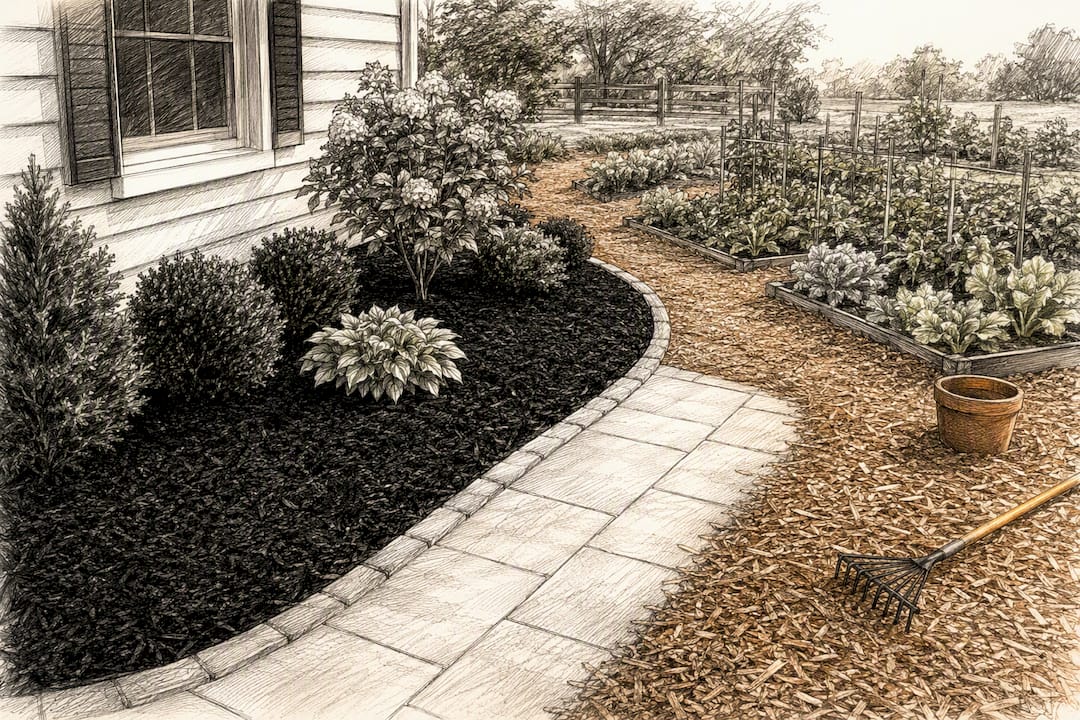
Once you’ve picked a type, the application rule doesn’t change: follow the 3-3-3 guideline. Apply about 3 inches of mulch, keep a 3-inch gap between the mulch and the base of any stem or trunk, and never let total depth exceed 3 inches. Piling mulch against a trunk, the classic “mulch volcano,” traps moisture against the bark and invites rot and pests.
A quick sequence for getting it right:
- Clear old debris and rake existing mulch to loosen compacted spots before adding anything new.
- Spread fresh mulch to a 2 to 3 inch depth, working outward from a clear ring around each plant’s base.
- Pull mulch back 3 inches from every stem and trunk, no exceptions.
- Water lightly after installation to help settle the layer, especially with dyed product.
A few things separate a clean install from a sloppy one:
- Dyed mulch can transfer color onto hands, tools, or light-colored hardscaping if handled while damp, so give it a day to cure before heavy foot traffic nearby.
- Install dyed mulch in spring or early summer when color impact matters most for the season ahead.
- Natural mulch can go down anytime, since its job is soil health rather than seasonal appearance.
Maintenance: When to Top-Dress and When to Start Over
Most dyed mulch needs a full annual refresh, with an optional midseason top-dress if the color starts looking tired by midsummer. Natural mulch breaks down faster, so beds built for soil health often need replenishing twice a year to maintain adequate depth.
Top-dressing works when the existing layer is still loose and under 3 inches deep: rake the old mulch to loosen it, then add a thin new layer on top and blend the edges so the color reads even. Full replacement makes more sense when the old layer has compacted into a dense mat, since a compacted bed blocks water and air from reaching roots underneath.
One rule applies no matter which mulch you use: never till or mix wood mulch into the soil. Microbes that break down carbon-rich wood pull nitrogen straight out of the surrounding soil to do it, a process called nitrogen lock that can stunt whatever you’re trying to grow. Mulch stays on top, always.
- Rake and top-dress if the old layer is loose and under 3 inches
- Strip and replace if the old layer is compacted or matted down
- Never mix old mulch into the soil, even when tilling a bed for replanting
Roberto’s Perspective on Choosing Between Dyed and Natural
Most requests fall into two clean categories, and you can usually guess which one a homeowner will pick just by asking what the bed is for. Front yards and anything visible from the street tend to lean dyed, black and dark brown especially, because the visual payoff against siding and stonework is immediate. Backyards with vegetable plots or kids’ play areas swing natural almost every time, once people understand what’s feeding the soil versus what’s just sitting on top of it.
Sourcing gets checked before anything goes on a truck, because the wood matters more than the color ever will. If you’re not sure which fits your yard, a free on-site quote settles it fast.
— Roberto
Professional Mulch Delivery and Installation Done Right
Choosing professional mulch delivery and installation can save you the trouble of guessing your way through a mulch job or hauling bags home from a big-box store one trunk load at a time. Getting the depth right, keeping mulch off plant stems, and confirming the wood source before it’s spread all take more attention than most weekend projects allow, and getting it wrong costs you a redo. Mulch delivery and installation covers all of it: sourcing you can ask about, correct depth and spacing on every bed, and a clean finish that doesn’t stain your walkway.

Quotes are typically scheduled within 1 to 2 days. If you’re weighing dyed against natural for your own yard, request a free on-site quote and get a straight answer on which one fits your beds, along with pricing before any work starts.
Sources
For readers who want to go deeper, UW Extension’s mulch guide covers fade timelines and material comparisons in more technical detail. UMass’s fact sheet on colored bark mulch is the clearest breakdown of pigment safety available. Penn State Extension’s mulch survey and the Mulch & Soil Council’s FAQ page both back the sourcing and labeling guidance covered above.
- Mulches for home gardens and plantings — UW Extension
- Colored bark mulch — UMass Center for Agriculture, Food and the Environment
- Mulch - A survey of available options — Penn State Extension
- Mulch & Soil Council — Frequently asked questions
FAQ
What Is the 3-3-3 Rule for Mulch?
Apply about 3 inches of mulch, keep a 3-inch gap between the mulch and any plant stem or tree trunk, and never let total mulch depth exceed 3 inches to avoid suffocating roots.
What Is the Best Color of Mulch to Use?
It depends on your bed’s purpose: black or dark brown dyed mulch gives the strongest curb-appeal contrast against light siding, while natural brown blends into almost any landscape and suits soil-building beds.
What Is the Healthiest Mulch to Use?
Natural, undyed mulch like shredded hardwood or pine bark breaks down faster and returns organic matter to the soil, making it the better choice for vegetable gardens and any bed where soil health is the priority.
How Long Does Dyed Mulch Last?
Dyed mulch typically holds its color through a full growing season, while natural wood mulch starts fading to grey-tan within 3 to 4 weeks of installation.
Is Colored Mulch Safe for Pets and Kids?
The pigments in colored mulch, mainly iron oxide and carbon black, are inert and not considered hazardous, though it’s worth confirming the wood source before using any mulch in play areas.
Recommended
Get a free in-person quote.
We come out, walk the property with you, and give you the number on the spot, free, no obligation, across 18 north Atlanta cities.
Call (770) 309-1050