
Commercial Debris Removal
Property Managers: Require COIs and Weight Tickets for Commercial Debris Removal
Hire a vetted commercial debris removal provider when speed, documentation, or scale rule out DIY hauling. The right crew clears a site faster than your staff could, hands you weight tickets and disposal receipts you can show an auditor, and works around your business hours instead of the other way around. Before you sign anything, ask for a certificate of insurance, a clear pricing method, and an on-site quote.
TL;DR:
- Commercial debris removal costs vary based on the pricing method, with dense materials billed by weight and mixed loads by volume or flat rate, affecting final invoices.
- Hazardous or regulated materials like asbestos or biohazard waste require licensed specialists, and standard haulers will not handle these properly or legally.
- Service models such as same-day, after-hours, or recurring pickups can save costs and reduce business disruptions, but require prior coordination and clear communication.
- Proper vetting includes verifying insurance, disposal documentation, transparent pricing, and building access arrangements to prevent billing disputes and ensure compliance.
- Scheduling debris removal outside of regular hours minimizes operational disruptions, especially for active retail or office spaces, and documentation ensures clear compliance and reporting.
Table of Contents
- What Does Commercial Debris Removal Cover?
- Which Service Model Fits Your Job?
- How Do Commercial Debris Removal Providers Price Jobs?
- How Should You Vet a Commercial Debris Removal Company?
- What Trips Up Commercial Jobs on Logistics?
- How Roberto’s Stump Grinding Services Handles Commercial Debris
- What Property Managers Get Wrong About This Process
- Ready to Request a Commercial Debris-Removal Quote?
- Sources
- FAQ
What Does Commercial Debris Removal Cover?
Commercial debris removal spans a wider range of materials than most business owners expect, and knowing what’s included (and excluded) before you call saves a wasted trip and a rescheduled crew.
Construction and renovation debris makes up the bulk of commercial calls: drywall, lumber scraps, tile, roofing shingles, and mixed demolition material from build-outs or teardowns. A general contractor mid-renovation often needs this cleared daily just to keep the site walkable.
Office, retail, and warehouse cleanouts cover a different category entirely: old furniture, metal shelving, wooden pallets, and electronics. Electronics deserve their own note. Many providers separate e-waste (monitors, servers, printers) for specialized recycling rather than standard landfill disposal, since some components require different handling.
Specialty removals round out the list: decommissioned restaurant equipment, walk-in coolers, light machinery, and yard or storm debris after a wind event knocks down fencing or downs a tree limb.
What most commercial haulers won’t touch:
- Hazardous chemicals, solvents, or fuel containers
- Asbestos-containing materials from older buildings
- Regulated biohazardous or medical waste
- Refrigerants that require certified extraction before disposal
If your project involves any of the above, bring in a licensed hazardous-waste specialist first. Standard commercial crews aren’t equipped or permitted to handle it, and a reputable provider will tell you that upfront instead of quietly loading it onto the truck.
Which Service Model Fits Your Job?
Not every commercial job needs the same setup. Matching the service model to your timeline and volume is where most of the cost savings actually happen.
- On-demand full-service hauling. A crew shows up, loads everything, sweeps the space, and hauls it away in one visit. This is the right call for a quick turnaround or heavy items your team physically can’t lift, like a broken conference table or a gutted server rack.
- Same-day or after-hours service. Active retail stores and occupied offices usually can’t have a crew clattering through the lobby at 2 p.m. Providers that offer after-hours and weekend work let you clear debris overnight so customers and staff never see it happen.
- Recurring pickup programs. Warehouses, property management companies, and retail chains generate a steady trickle of waste rather than one big pile. A scheduled pickup arrangement, similar to the container programs larger waste companies run for businesses, keeps volume predictable and avoids one-off dispatch fees.
- Dumpster rental as an alternative. Renting a roll-off container is often cheaper per cubic yard for a long project, but your crew does the loading, and you’ll likely need a street or permit clearance if it sits on public property. Full-service hauling costs more per trip but eliminates the labor and paperwork entirely.
How Do Commercial Debris Removal Providers Price Jobs?
Most commercial haulers price jobs one of three ways: by weight, by volume, or by flat quote for a known scope, and understanding which method applies to your job is the difference between a fair invoice and a dispute.
Pay-by-weight relies on truck scales, and it’s typically used for dense material like concrete, dirt, or brick where cubic yardage doesn’t reflect the real cost. Some commercial haulers use onboard truck scales specifically so the final bill matches a verifiable weight ticket rather than a visual estimate.
Volume or cubic-yard pricing is common for mixed loads, furniture, and general office cleanouts, where the crew estimates how much of the truck your debris fills. Flat-rate quotes work best when the scope is fully known in advance, like a single-room strip-out with a fixed inventory.
Expect ballpark ranges roughly like this, though local disposal fees shift these numbers:
- A single bulky item (one desk, one appliance) tends to run at the low end of a minimum trip fee
- A partial truckload of mixed office debris sits in the middle range
- A full truckload of construction debris or dense material runs highest, driven largely by weight
Pro Tip: Ask what triggers a surcharge before the job starts. Stairs, long carry distances from a loading dock, and unusually dense material are the three most common reasons a quote and a final invoice don’t match.
Landfill and transfer station tipping fees are published publicly in most jurisdictions, and they materially affect what a hauler charges you. The fee schedule at a facility like Brooks Landfill in Wichita shows how disposal costs vary by material type, which is exactly why a provider’s per-ton rate can shift from one job to the next. Always request weight tickets or a disposal manifest along with an itemized invoice, so every line item traces back to a documented cost rather than a round number.
How Should You Vet a Commercial Debris Removal Company?
Procurement for a commercial account looks different from hiring someone to haul a couch out of a garage. You’re signing a vendor, not booking a one-off favor, so the paperwork matters as much as the price.
Start with documents. A legitimate provider hands over a certificate of insurance naming your business (or building) as an interest, disposal receipts or weight tickets for every job, and W-9 or standard AP terms if you’re setting up net-30 invoicing. If you’ve promised your tenants or leadership that debris gets recycled or donated rather than landfilled, ask for photo or manifest proof of that too.
Then ask operational questions before you sign:
- Can your crew work after hours or on weekends without an extra fee?
- How do you protect floors, walls, and elevators during load-out?
- Do you coordinate freight-elevator bookings and building access in advance?
- Do you support recurring pickups and net-30 invoicing for repeat business?
| What to check | Why it matters |
|---|---|
| COI turnaround time | Property managers often need proof of insurance before granting building access |
| Disposal documentation | Weight tickets and manifests back up your invoice and any sustainability reporting |
| Pricing transparency | Auditable pricing models cut down on billing disputes for repeat commercial accounts |
| Building coordination | Freight-elevator scheduling and floor protection prevent damage claims |
Red flags are easy to spot once you know to look. A provider that hesitates on the COI, gives you a vague “we’ll figure out the price on-site” answer with no method attached, or can’t name a single commercial client, isn’t ready for a business account yet. Industry groups like Franchise publish broader guidance on vendor standards and business operations that’s worth a skim if you’re setting up a formal RFP process for the first time.
What Trips Up Commercial Jobs on Logistics?
Commercial debris removal comes with coordination requirements a residential job never has, and most of the surprises show up in three places.
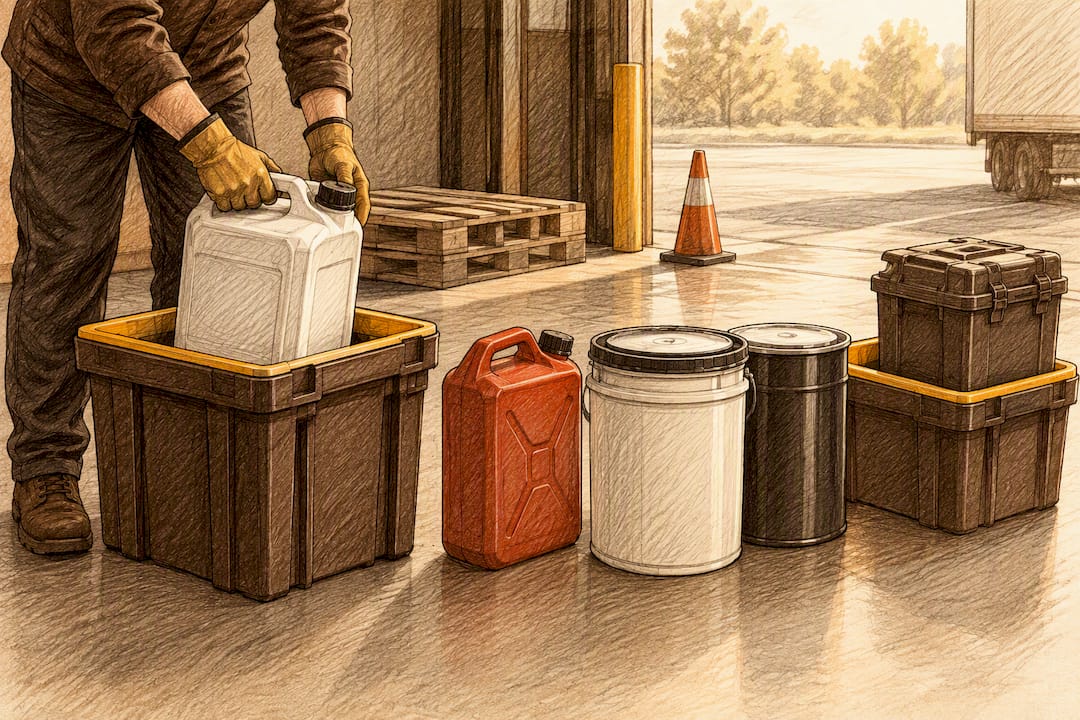
Hazardous and regulated materials top the list. Chemicals, fuel containers, asbestos, and biohazardous waste need a licensed specialist, not a standard hauling crew, and a provider that tries to take them anyway is one you should avoid.
Heavy and dense debris causes the second most common surprise. Concrete and packed dirt often hit a truck’s weight limit long before the container looks full, which is why dense loads sometimes need a separate haul or a different container size than a load of drywall and furniture would.
Building access rounds it out:
- Freight elevator reservations, sometimes booked days in advance in larger properties
- Load-in path planning to avoid scuffed walls or damaged flooring
- After-hours access coordination with building security or a property manager
- Permits for street-level dumpster or roll-off placement in some municipalities
None of this is complicated, but all of it needs to happen before the truck shows up, not after.
How Roberto’s Stump Grinding Services Handles Commercial Debris
Roberto’s Stump Grinding Services lists debris removal and storm cleanup among its core offerings across 18 North Atlanta cities, backed by free on-site quotes delivered within one to two business days, full insurance coverage, and a 30-day satisfaction guarantee. A fast quote and quick certificate of insurance availability mean less time waiting and more time scheduling around a building’s needs.
Such policies translate into procurement benefits: documented insurance for compliance, reliable scheduling, and a guarantee that provides recourse if the job isn’t done right.
Pro Tip: Schedule storm-debris or bulk cleanout pickups after hours when possible. It keeps your lobby, loading dock, and parking lot clear during business hours and avoids the foot traffic disruption that daytime hauling causes.
What Property Managers Get Wrong About This Process
The advice most guides give on commercial debris removal focuses almost entirely on comparing prices between haulers. That’s the wrong starting point. Price comparisons without documentation comparisons are how businesses end up with a cheap quote and no paper trail when a building manager, insurer, or auditor asks where the debris actually went.
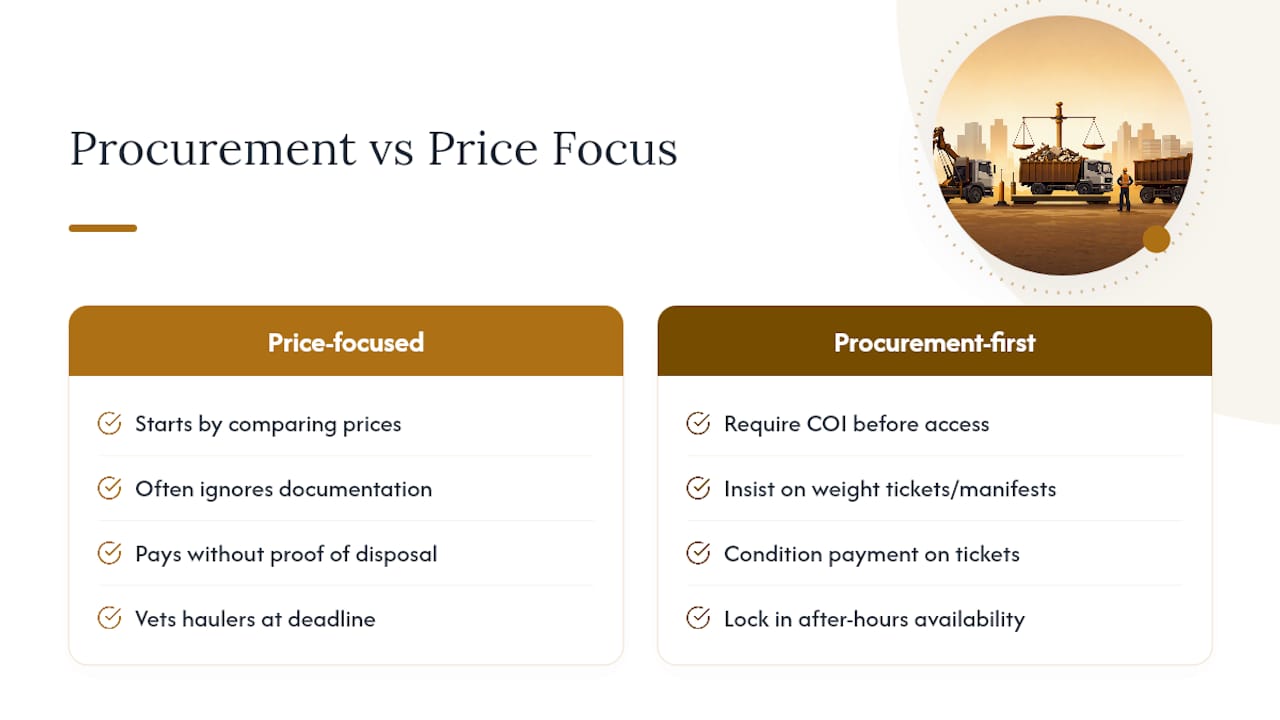
The real leverage point is procurement discipline: requiring a COI before access, insisting on weight tickets or disposal manifests as a condition of payment, and locking in after-hours availability before you need it in an emergency. Contractors who wait until a demolition deadline to vet a hauler almost always end up paying rush pricing to whoever answers the phone first.
If there’s one thing worth prioritizing over everything else in this guide, it’s this: treat the paperwork as part of the service, not an afterthought you request if you remember. A provider who hands you documentation without being asked twice is telling you something about how they run every other part of the job too.
— Roberto
Ready to Request a Commercial Debris-Removal Quote?
A company handles debris removal and storm cleanup for businesses and property managers across multiple North Atlanta cities, with free on-site quotes delivered in one to two days and every job backed by insurance and a satisfaction guarantee.
Before you call, have a few details ready so your quote comes back fast and accurate: the site address, a rough scope of what needs clearing, any access notes (stairs, freight elevator, gate codes), your preferred service window (including after-hours if you need it), and whether the load includes anything heavy or dense like concrete or dirt. That last detail changes how the crew plans the haul.
Storm debris on a commercial lot often overlaps with broader site cleanup, and Robertostumpservices’ outdoor services team can coordinate that alongside the removal itself. Ready to get a number in writing? Request your free on-site quote through the debris removal page and a crew will get back to you within one to two business days.
Sources
- Commercial Waste Disposal & Recycling Pickup | WM
- Franchise
- Commercial Junk Removal NYC - After-Hours OK | J&D
- Commercial Junk Removal Services | JunkStart
- Brooks Landfill | Wichita, KS
FAQ
How Much Does It Cost to Get Rid of Debris?
Cost depends on the pricing method: pay-by-weight for dense material, volume pricing for mixed loads, or a flat quote for a known scope. A single item sits at the low end near a minimum trip fee, while a full truckload of construction debris runs highest, largely because dense material like concrete is billed by weight rather than volume.
What Is Considered Commercial Junk Removal?
Commercial junk removal covers business-generated debris: construction and renovation waste, office or retail cleanouts, furniture, old equipment, and storm or yard debris on commercial property. It typically excludes hazardous materials, asbestos, and biohazardous waste, which require a licensed specialist instead of a standard hauling crew.
What’s Usually Included in a Flat-Rate Junk Removal Service?
A flat-rate service typically bundles loading, hauling, and disposal into one price for a defined scope, like clearing a single office or a known volume of debris. Reputable providers back that price with documented disposal receipts and, when available, weight tickets so you can verify the invoice against the actual job.
Does Robertostumpservices Handle Commercial Debris Removal?
Yes. Robertostumpservices offers debris removal and storm cleanup for businesses and property managers across 18 North Atlanta cities, with free on-site quotes in one to two days and a 30-day satisfaction guarantee. Current pricing isn’t published, so request a quote through the debris removal service page for an exact number.
Can Commercial Providers Work After Hours or on Weekends?
Many commercial debris removal companies offer after-hours and weekend scheduling specifically to avoid disrupting active retail stores, offices, or warehouses during business hours. This is one of the standard features of commercial service agreements, so it’s worth confirming availability and any added fee before you book.
Recommended
Get a free in-person quote.
We come out, walk the property with you, and give you the number on the spot, free, no obligation, across 18 north Atlanta cities.
Call (770) 309-1050